Anthropic reached the same list
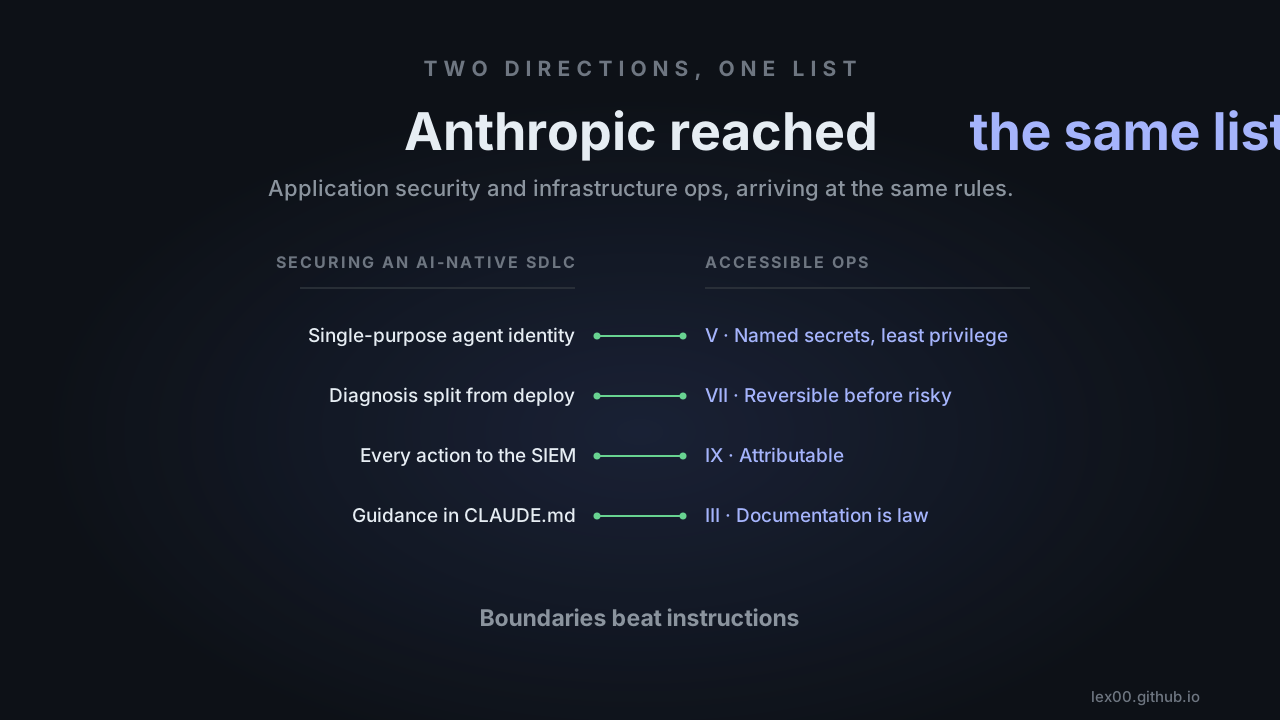
Anthropic published how they secure an AI-native software development lifecycle. Claude writes roughly 80% of the code merged there, so no control that depends on a human reading everything survives.
Accessible Ops is fourteen principles for infrastructure operations, written for the same pressure from the other end. Most of what Anthropic describes lands on rows in that list.
Their governing rule of Least Agency draws hard boundaries around what an agent can access and do rather than relying on what it is told. chant is partway there. chant build imports your TypeScript and runs it, held safe only by lint rules. chant build --fold reduces the source to a value without executing the module, and --sandbox confines whatever falls back. Anthropic’s rule is a good argument for making fold the default.
Their incident response agent can read production logs and post to channels but cannot deploy a fix. Deploying takes a separate agent and a human. Rows VII and VIII cover reversible before risky and escalate the judgment. Every agent gets a single-purpose identity with the minimum permission it needs per rows V and VI. Every approval and tool call and agent-to-agent message lands in their SIEM, and agents talk in shared channels people can watch. Row IX, attributable. Security guidance lives in CLAUDE.md files so the generating agent holds it while writing. Row III, documentation is law. And their closing question, what would you run if scanning were nearly free, is row II. Put the check at the keystroke. They run review agents at pull request time. A compiler runs earlier and costs nothing to invoke.
Their architecture is heavily runtime. It has behavioral monitoring of agents and risk-weighted human sampling of automated approvals and new reviewers in shadow mode until they earn trust. chant is build time and has none of that.
This is no endorsement. Anthropic is describing its own internal tooling and is not writing about infrastructure at all. But two teams starting from different problems arrived at nearly the same rules for letting an agent near production, which suggests the problem itself forces the list. The rule Accessible Ops should take from their side is least agency.