choudoufu cuts terralith optimization time in half

choudoufu is a fork of OpenTofu with live markers.
This blog takes a look at Cursor’s recent migration from Terraform to OpenTofu, and how it could have gone differently if it wasn’t held back by state.
choudoufu writes ownership on the resource itself
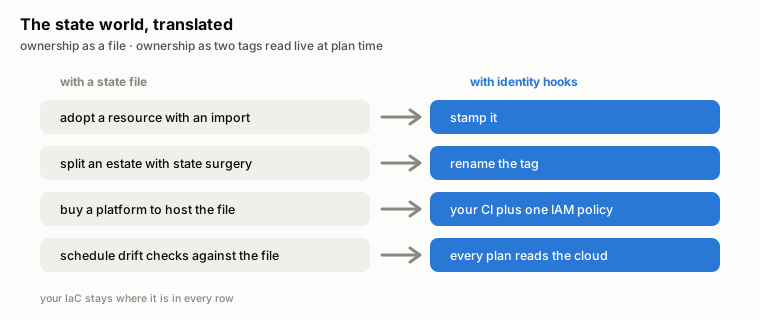
choudoufu adopts by stamping while Terraform adopts by fixing resolution in state. Two tags on the resource, read live at plan time. That’s the whole trick of live markers.
What takes less time
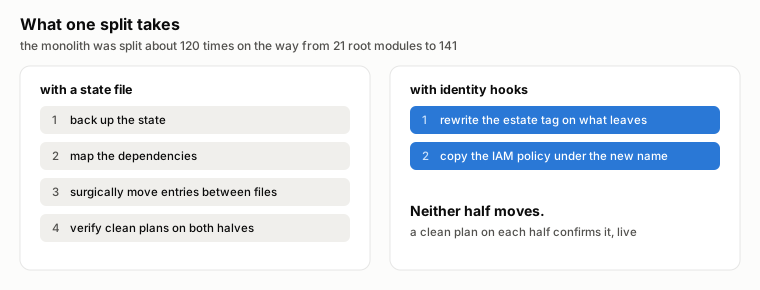
To keep track of resources and ownership, OpenTofu requires a giant miserable ball of JSON that must be protected and backed up. Resources get adopted by tagging instead, thanks to identity hooks. An existing OpenTofu codebase imports directly. Adoption asks for no rewrite, though the compatibility reference lists HCL that is still refused.
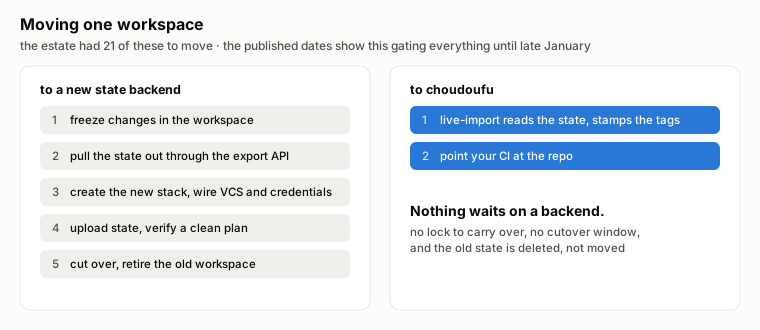
This means moving resources is as easy as changing tag values. Each plan reads the cloud directly, avoiding costly drift workarounds.
The slowest part sets the calendar
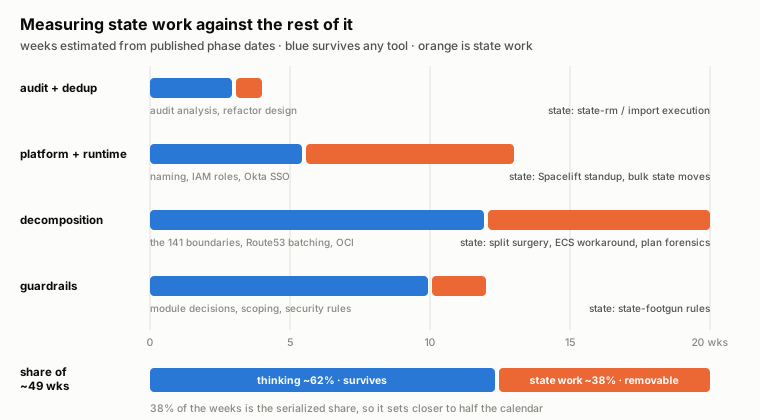
In the actual migration the slowest chain was state. Splitting the published phases myself puts state work at 38% of the engineering weeks, and a larger share of the calendar, since parallel work shares the schedule while the serialized chain sets it. Removing the state chain reduces the timeline driver to the decision making on boundaries.
Half the time
The top track is Cursor’s timeline. The bottom two are the same estate on identity hooks.
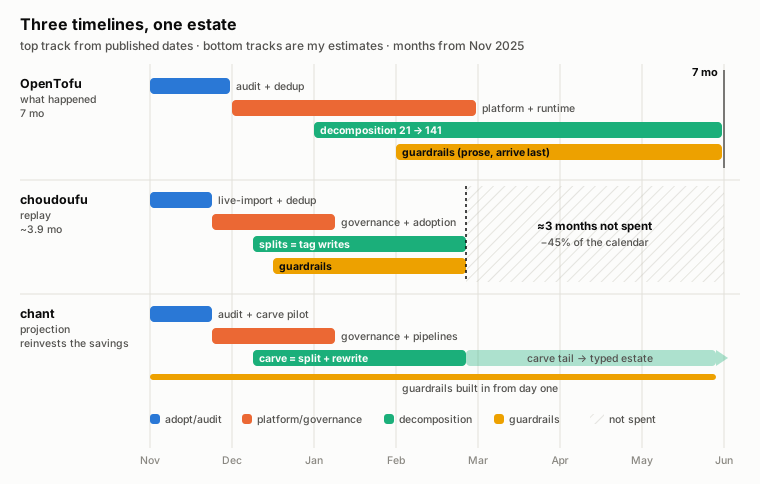
Either of the bottom tracks offers you a migration path taking half the time. People problems stay at full price in my math and the months I subtract are all about Terraform’s state model.
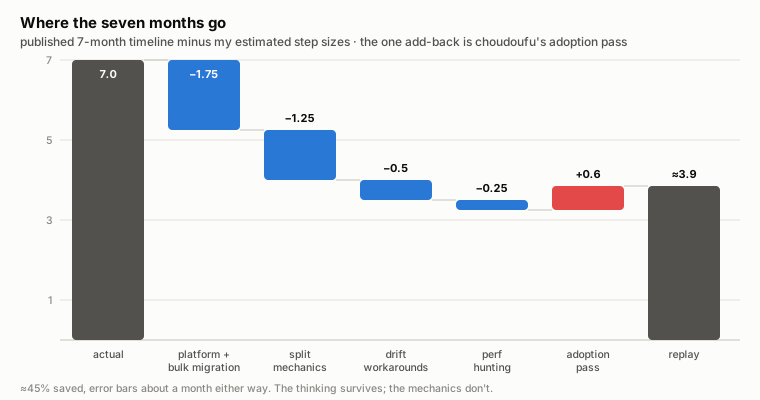
My claim is the same migration to choudoufu would be 3.5 to 4 months against the actual 7, with error margin about a month either way. Every before-and-after figure comes from the migration’s public case study. The step sizes are mine. So are the 38% split and the timeline.
What has been measured since
Some of this has since been run.
A generated terralith migrated cleanly through 4005 resources with nothing walling. Against real AWS the sweep held at 200 to 226 seconds at both the smallest size and 4x, so finding what you own scales with resource types. Reading it still scales with resources, same as stock.
With count, for_each and nested modules in play, no resource needed a hand written marker. That was the step I expected to cost most.
The estate was generated, so it says nothing about real world HCL. The timeline above is still an estimate.
What is chant?
chant is the reason choudoufu exists. It also works with live markers, among other useful changes from our favorite infra tools. choudoufu is experimental and AWS only, for now…