Infrastructure change coordination
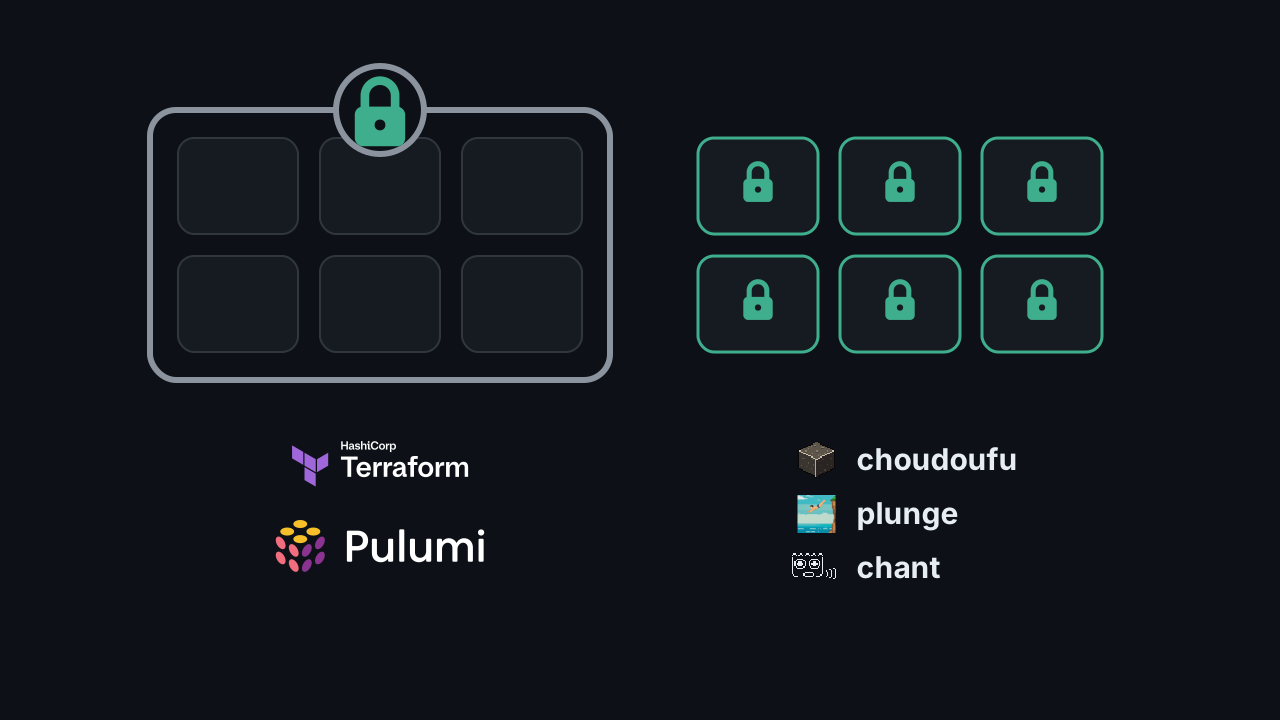
Coordinating applies comes down to ownership and boundaries, and the way you implement them shapes every operation that follows.
Terraform and Pulumi draw a boundary with a backend. Each backend carries one lock, so the lock sets where an estate ends, and every new boundary means another backend to run.
choudoufu for OpenTofu and plunge for Pulumi draw boundaries with labels on the resources. One backend holds a record and a lock per resource, and chant runs both kinds of root in one workspace.
Five everyday operations show the difference. In each picture the top half has a backend per boundary and the bottom half has boundaries by label.
Two changes to one resource
A backend lock keeps the state file consistent. A reviewed plan catches two people changing the same resource, in either model.
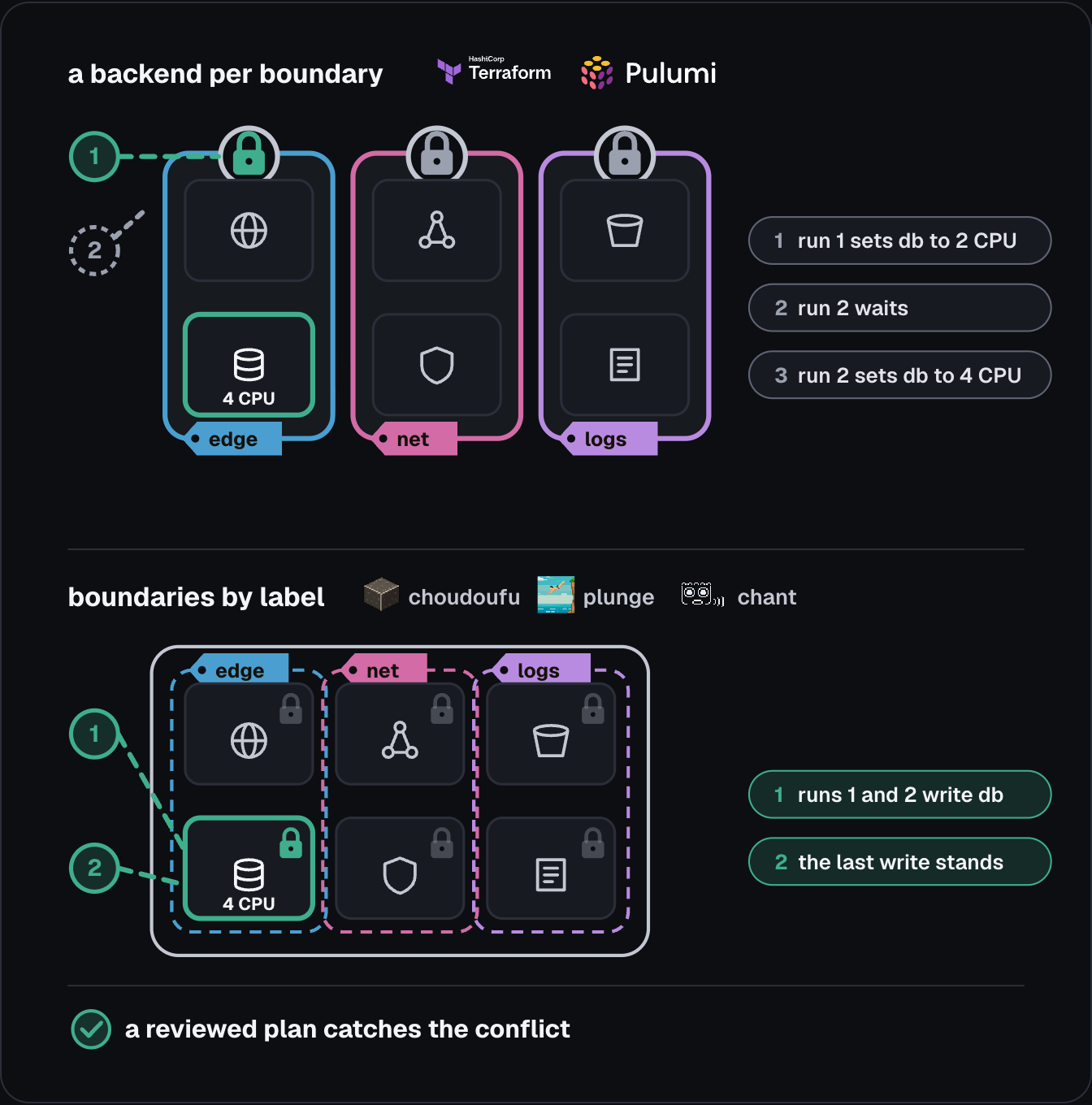
The queue on top buys file integrity. Coordinating people is the job of review, in both models.
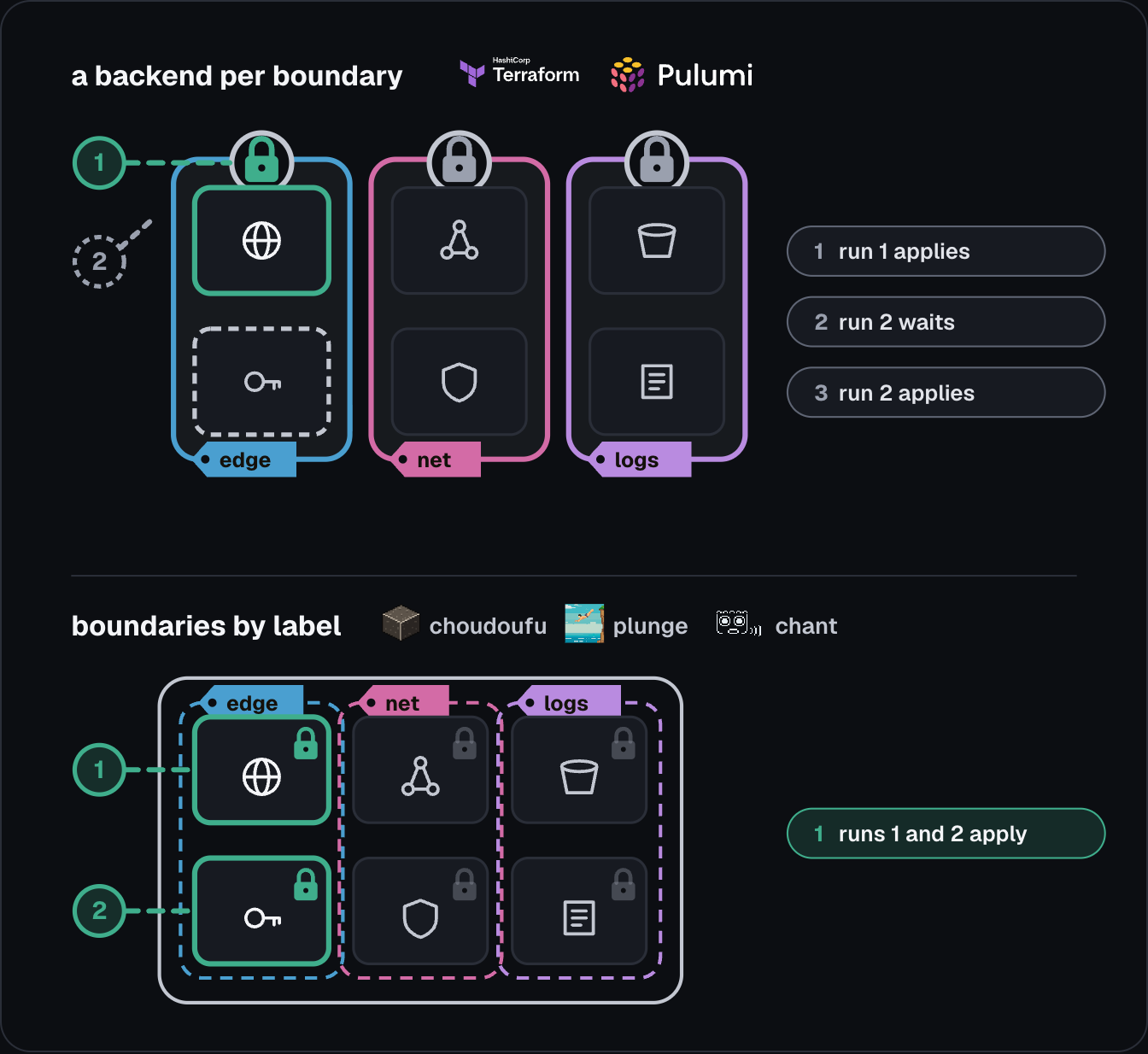
Two applies at once
A lock per backend makes runs in one estate take turns. A lock per resource lets runs on different resources go together.
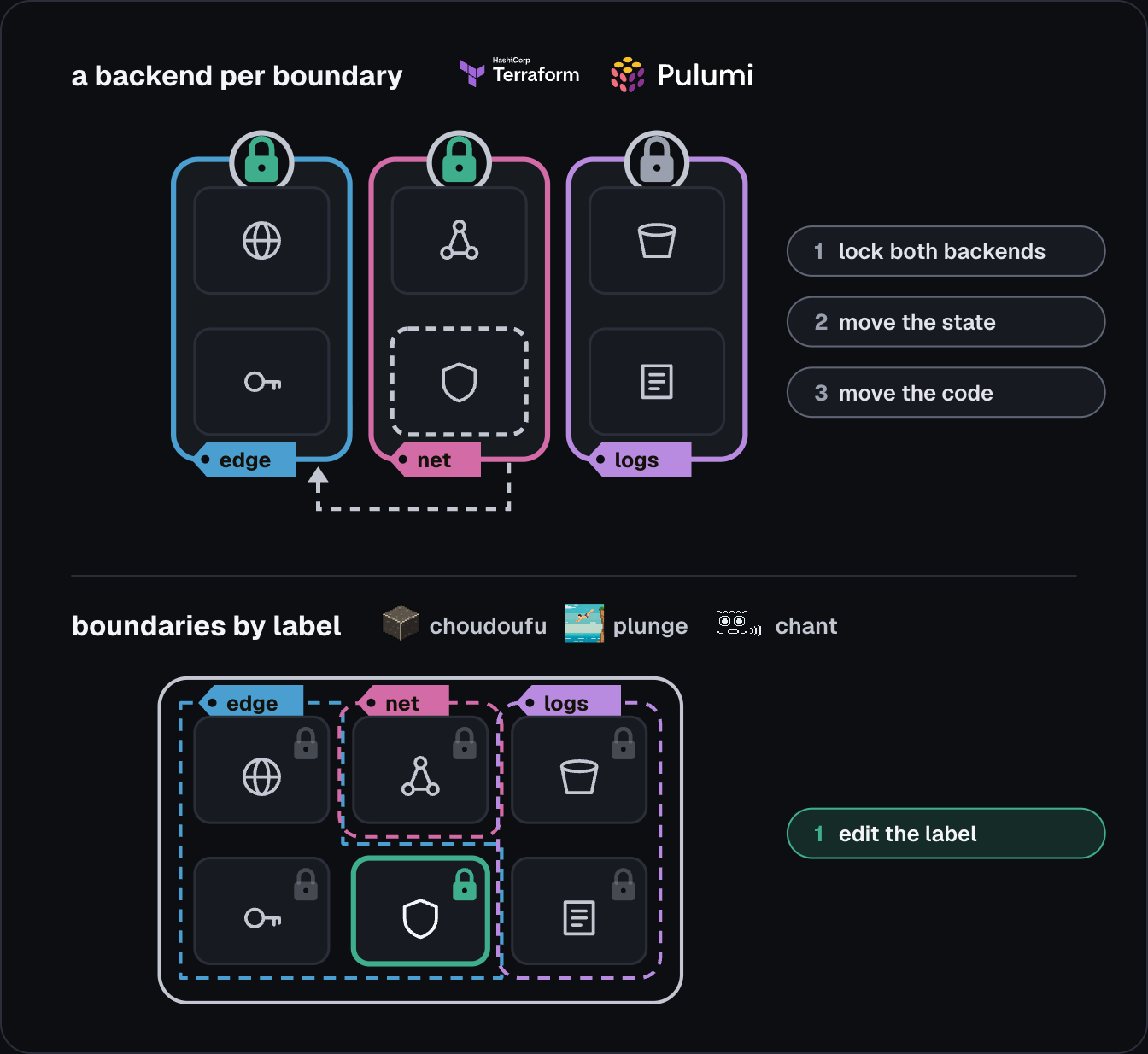
Moving a resource to another estate
Handing a resource to another owner means moving its state between backends, or editing one label.
An apply killed part way
A run that dies holds its backend’s lock until someone clears it. With a lock per resource, the next run starts straight away.
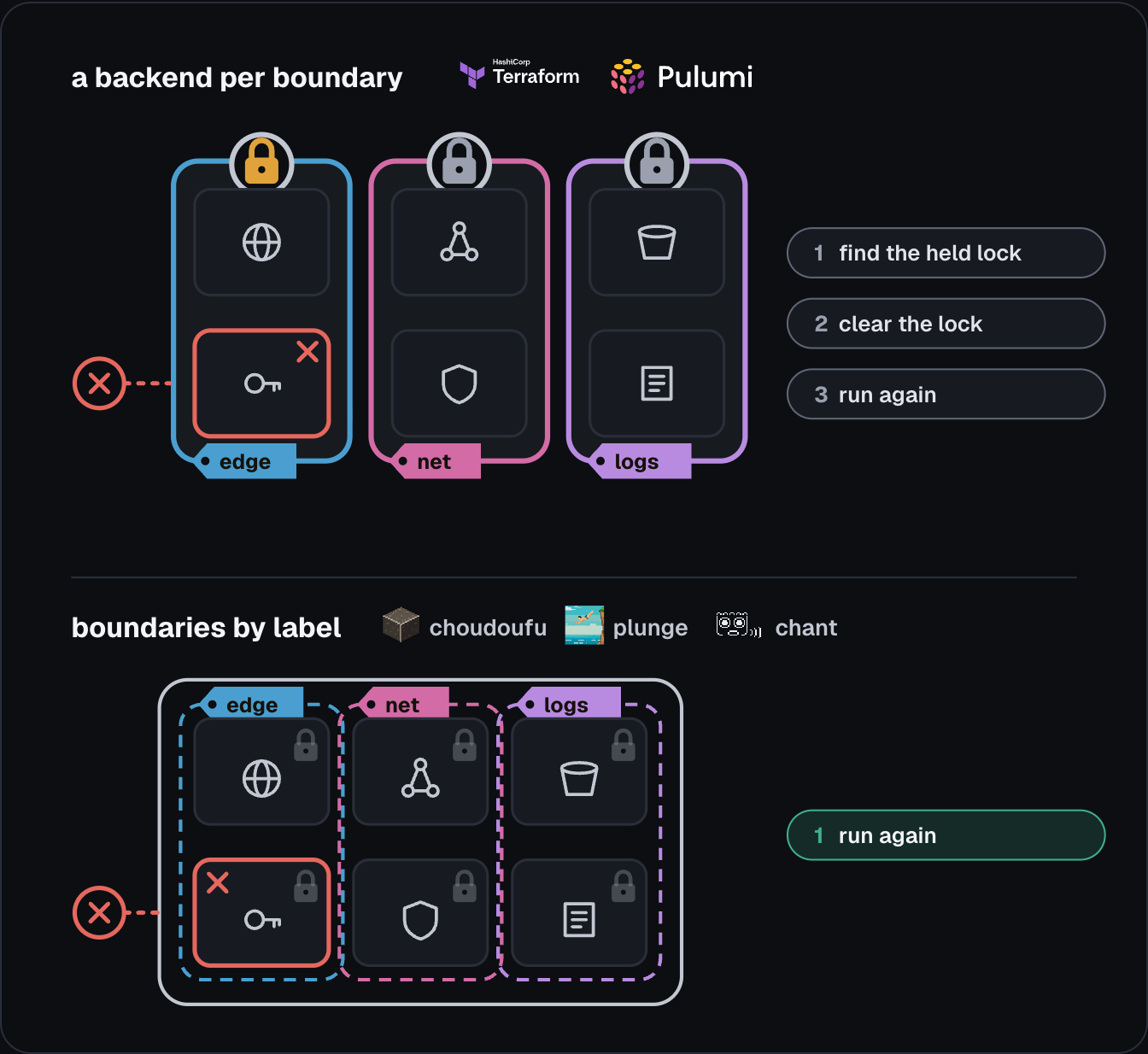
Starting a new estate
Under a backend per boundary, a new estate brings a new backend. Under labels, it joins the backend you already run.
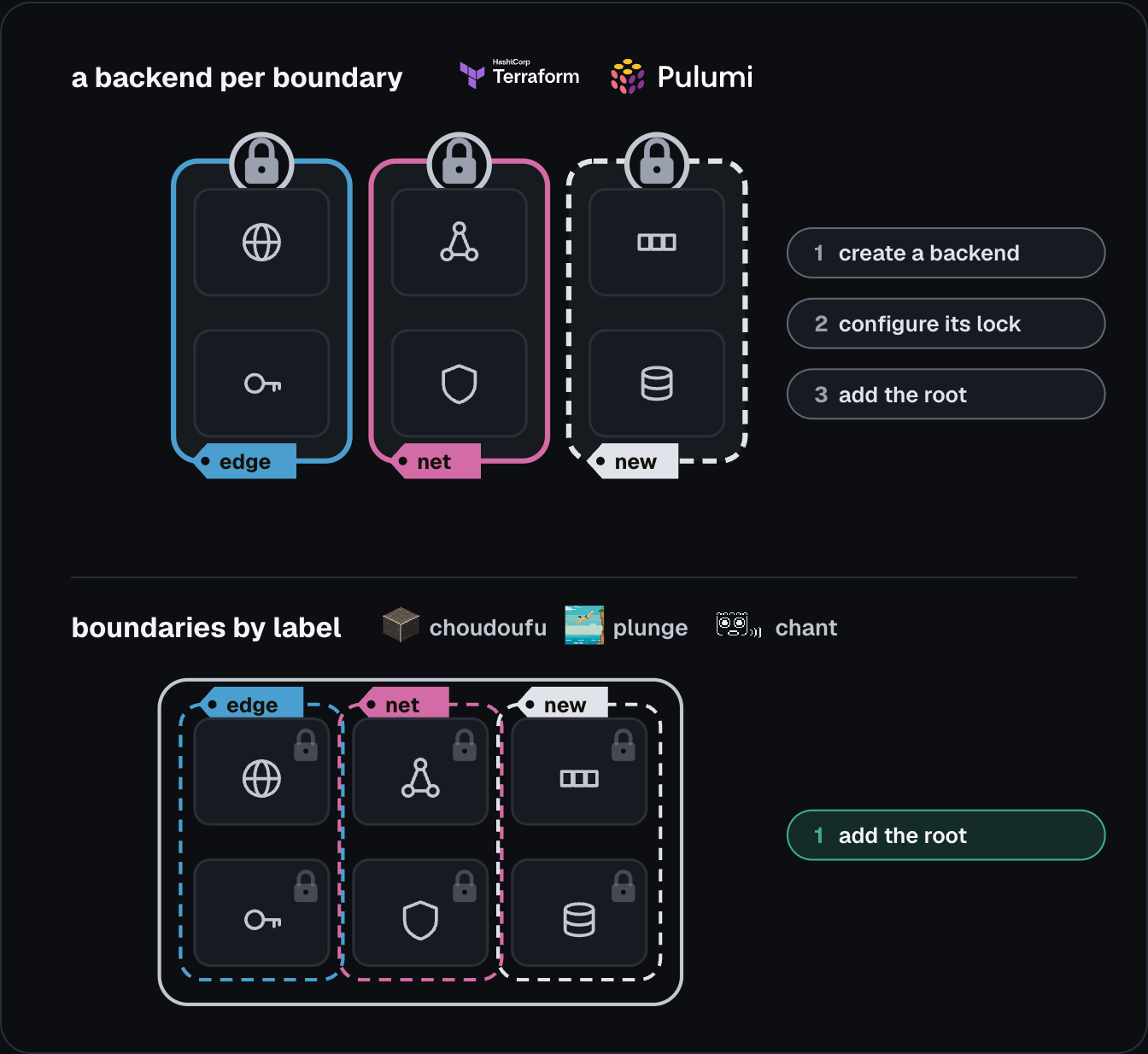
The same cards, with comparison tables for each fork, are at intentius.io/compare/coordinating-changes.
Read more
- terragucci: plans and approvals from pull requests for Terraform, OpenTofu and Terragrunt, in your own CI, with choudoufu as an engine
- plywood: the same for Pulumi, with plunge as its engine
- Resource-level concurrency for Terraform
- Solving the stress of infrastructure inheritance
- Terraform state has three pieces
- choudoufu runs on OpenTofu’s new runtime