Terraform state has three pieces
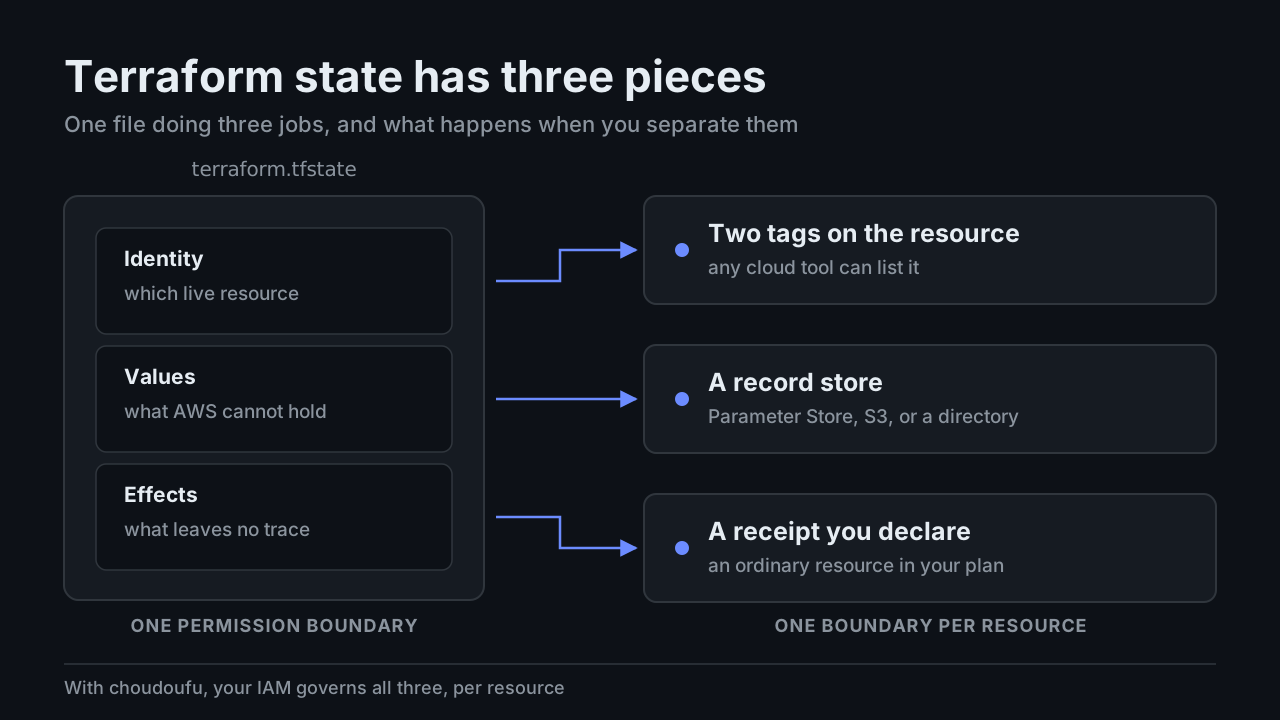
A state file does three jobs.
It says which live resource an address refers to. It holds values the cloud has nowhere to put. And it records that an effect happened.
Those got bundled because one file happened to do all of them. Bundling is what turns persistence into one permission boundary and a thing to lock.
Take them apart and each goes somewhere AWS already has. Identity becomes two tags on the resource. Values go in a record store, which holds secrets and is guarded like one. Effects get a receipt you declare, so the plan shows the migration coming before anything fires.
That is choudoufu, an OpenTofu fork I have been building.
No lock to manage
The state file is now a cache on the machine that ran, so there is no lock table to provision, permission, or force open.
Concurrent runs settle elsewhere. Two creates of the same named resource resolve on the cloud’s uniqueness constraint, a record write only lands if nobody changed that record first, and the loser re-plans clean.
One ABAC policy for every team
Ownership is a tag derived from the configuration address, so IAM can read it.
"Condition": {
  "StringEquals": {
    "aws:ResourceTag/tofu-estate": "${aws:PrincipalTag/team}"
  }
}
One policy covers every team, and onboarding is a session tag rather than a new policy. The same shape takes aws:CurrentTime for a change window, or aws:MultiFactorAuthPresent to touch production.
You could always write conditions like that. What you could not do is trust the tag. default_tags misses types that take none and modules that override them. Nothing checks it and stock OpenTofu never reads tags back anyway.
Because a plan reads the markers live, handing an estate to another team is a policy change, and a rename is a tag rewrite.