TypeScript is the right choice for infra
Typed configuration languages are one fix for YAML hell. Pkl, CUE, and KCL give you types, value constraints, and a compiler.
TypeScript solves the same problem, but it keeps going. It is the ideal foundation for an infrastructure toolchain, and chant is the proof.
The config languages take Wheeler’s deal
David Wheeler’s line is that any problem in computer science can be solved by adding another level of indirection. Kevlin Henney’s addendum is that this fails on the problem of too many levels of indirection.
Configuration languages have their answer. Place one of us in front of your YAML.
chant rejects this conclusion for infrastructure.
What a config language buys, and what it costs
Configuration languages offer guarantees that TypeScript alone does not. Pkl cannot execute code, because the capability is absent from the language.
chant chases the same properties by folding source instead of running it, and sandboxing the files that fall back.
A config language pays for that guarantee. Every spec it targets needs a library, and somebody writes it by hand, one spec at a time.
TypeScript - just look at it
The industry’s configuration formats descend from JavaScript, and TypeScript is the type system built for JavaScript. A typed object literal is typed JSON by descent.
YAML 1.2 is a JSON superset, and JSON was carved directly out of JavaScript’s object literal syntax in the first place.
TypeScript was designed for large-scale applications, and its design goals say so.
Goal nine is “a consistent, fully erasable, structural type system.”
Erasable types leave the output untouched. Structural types describe a shape. A shape is a schema.
Non-goal six directs you to “use TypeScript to describe existing libraries.”
Three people looked at this and picked differently
James Ward’s Pkl talk is the strongest case anyone has made for a purpose built configuration language. Watch it before you argue with any of this.
Luke Hoban co-created TypeScript and took it to infrastructure at Pulumi. Pulumi executes your TypeScript. Constructors run and API calls happen and the program’s result is the infrastructure. TypeScript as a program.
Brian Grant wrote the Kubernetes Resource Model and has argued for years that configuration is data. ConfigHub follows that through. The config lives as data in a store, and tools manipulate it. No language at all.
A new language and an executed language and no language.
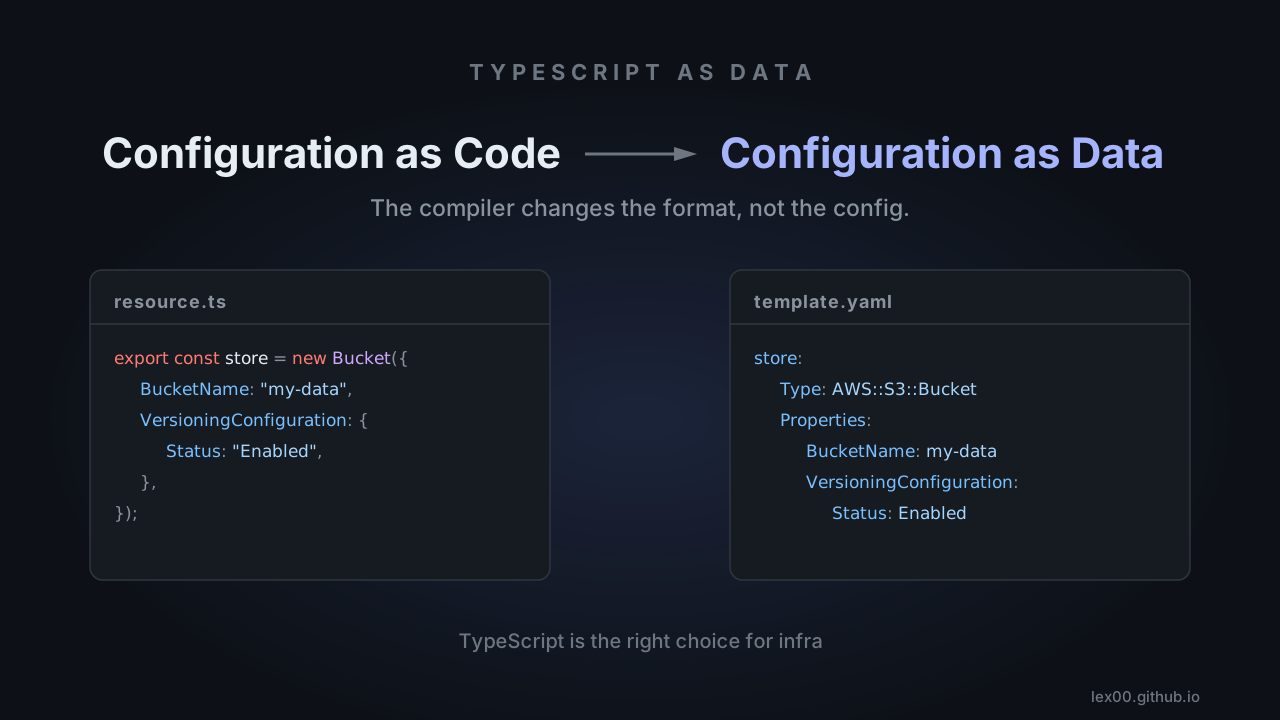
TypeScript as data
chant takes the language Hoban chose and the data model Grant argued for. Resources are typed object literals and the build reduces them to the spec while synthesis never touches the cloud.
Configuration as code and configuration as data, at the same time.
Where the abstractions end
Below are the accessible ops principles.
Here is the configuration language column beside chant, from the full chart.
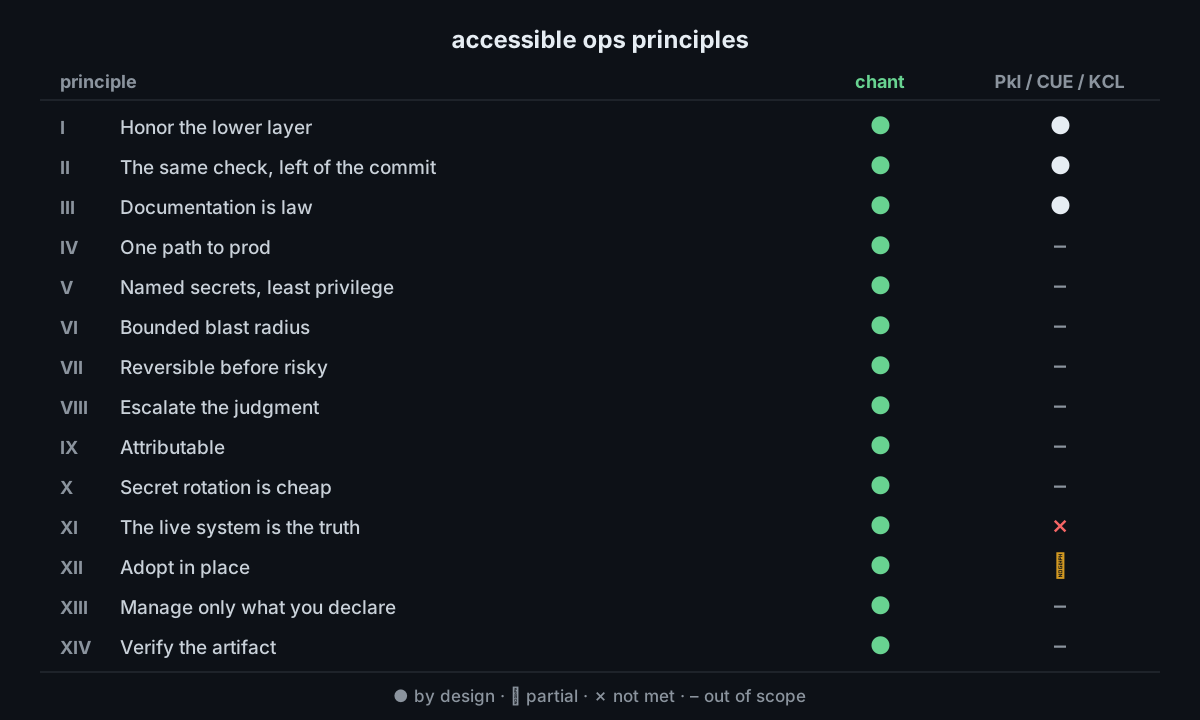
This is Intentius’ chart and is biased toward chant, so read it accordingly.
On value constraints the config languages reach past TypeScript. A port that refuses anything under 1024 is expressible there.
By design, eleven rows get answered somewhere else, in a second abstraction that shares no types with what you authored.
TypeScript-as-data gives you more. The same abstraction stays with you in your editor, and in your ops lifecycle.
The verdict
Config languages are good, so use them where appropriate.
An infrastructure toolchain answers all fourteen rows, and one abstraction should carry them.
TypeScript does. It’s already fluent in every editor and every model and already shaped like the spec.
TypeScript is the right choice for infra.
The benchmark agrees
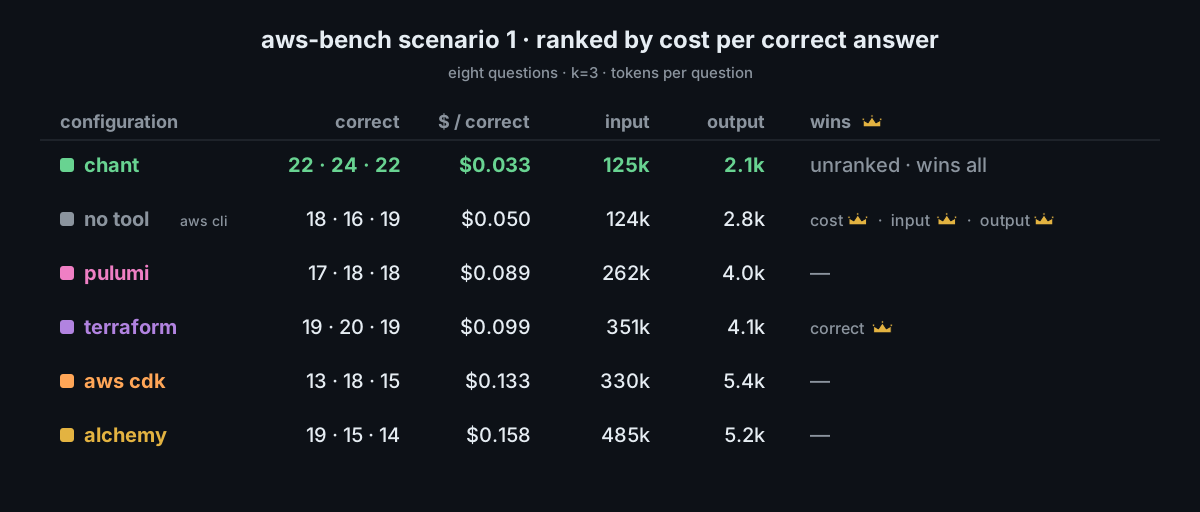
aws-bench scenario 1 put this argument on the record. Same model on every side, Haiku 4.5, against Terraform, Pulumi, CDK, Alchemy, and an agent with no infrastructure tooling at all. The details are in the scenario 1 wrap, and every run is published on chant-bench.